
The Surreal Case of the Black Nazarene Procession: Setting the Mood
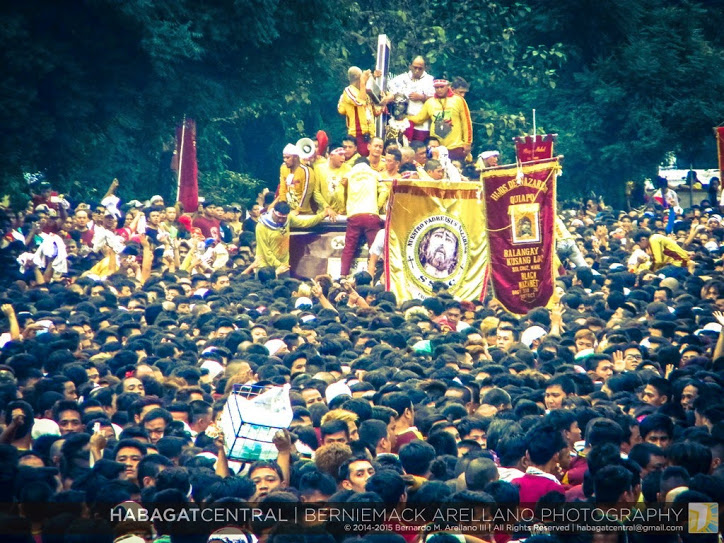
The Andas and the sea of humanity
One word: Surreal. This describes best the Procession of the Black Nazarene, or Traslación de Nazareno (literally “The transfer of the Black Nazarene”), one of the Philippines’ most anticipated and well-known festivities of devotion and folk Catholicism. Thousands (millions as the authorities claimed) of faithful troop down to the country’s capital in an annual tradition that seems to defy logic and beyond words, Unlike other religious Catholic processions in the country, this one is far from solemn—and that is its trademark.
This was our first time.
Setting the Mood
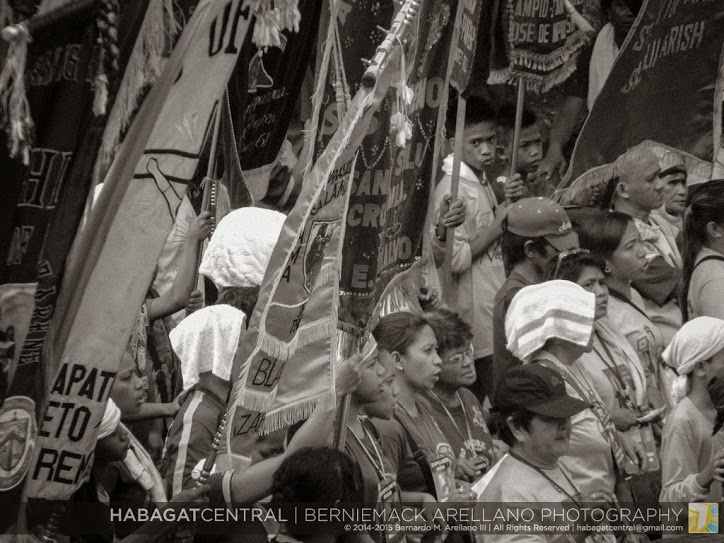
The banners mark the beginning of the procession line
Grey sky morning greeted us that 9th of January, with cool winds from the northeast, bringing drizzle to which the devotees see it as a blessing from the heavens. Thanks to the National Museum of the Philippines, we get to have a “front row” view of the passing procession, in which it is thought to reach the area at around 9-10 in the morning.
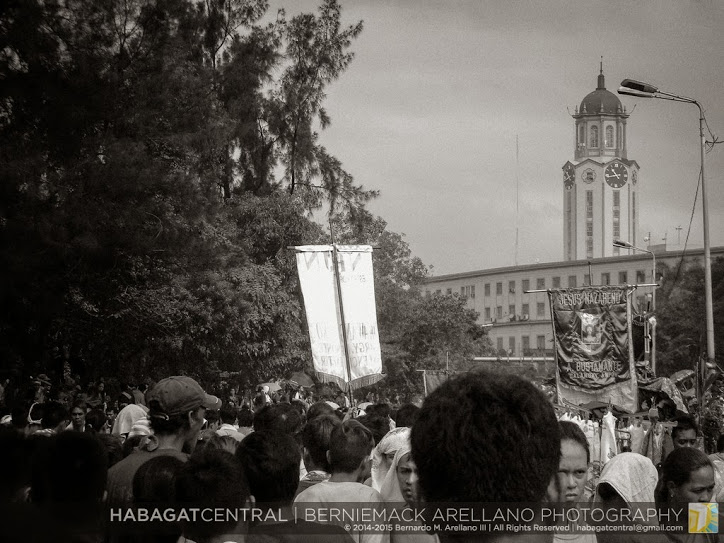
At the ground level
Thousands of yellow and maroon clad men and women troop the streets. Some were heading to Quiapo, others heading towards where the Ándas is, the carriage of the image of the Black Nazarene. The mood of the “American Manila” as we call it was up a bit. The streets were closed, and the mood was festive.
At around 9 in the morning, the first of the flags and banners of the devotees have passed by. The procession has started—albeit slower than it was the previous year.
Lipat-Bahay si Poong Nazareno
Hecho en Mexico (Made in Mexico) sometime in the 17th century, the Recollects were the first ones to “promote” the veneration of the suffering Christ in the Philippines. It was once enshrined in the Church of San Nicolas de Tolentino, currently believed to be somewhere in Luneta. In 1787, Archbishop of Manila Sancho de Santas Junta y Rufina ordered the transfer of the image to Quiapo from the Recollect church. From then on, it survived several fires, earthquakes and the destructive 1945 “Liberation” efforts of Manila.
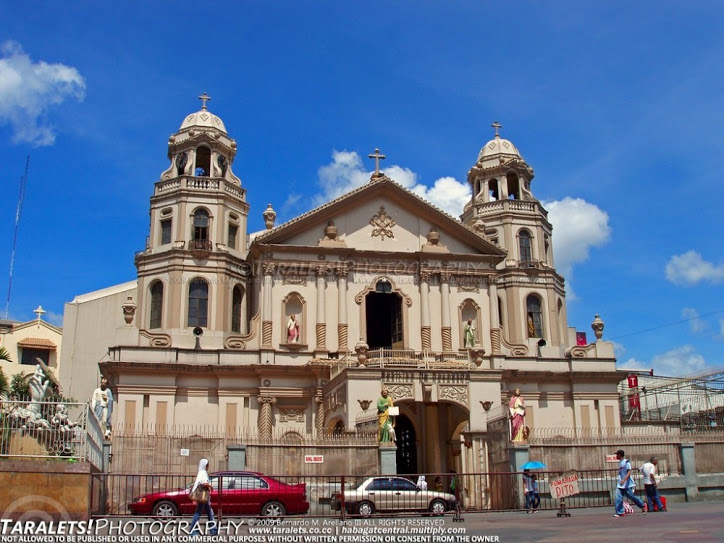
The Basilica Minore de Nazareno, or known as Quiapo Church
The procession of the Black Nazarene within the streets of Old Manila is a re-enactment itself of that lipat bahay or transfer of the said relic to its new address north of the banks of Pasig River.
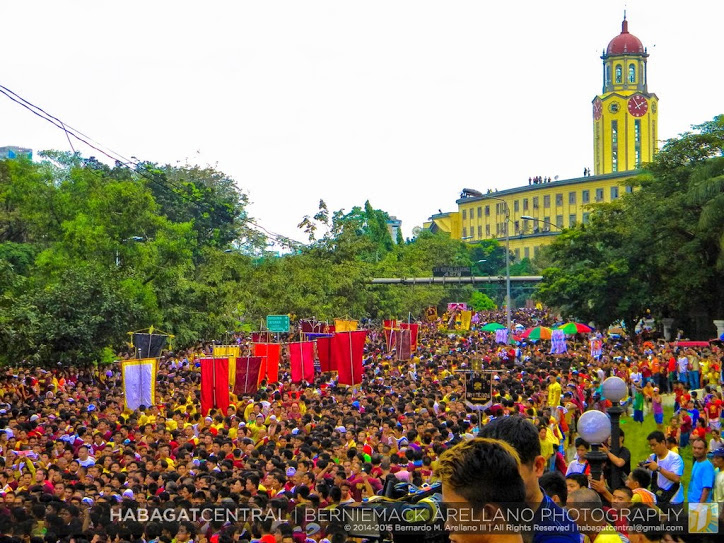
Manila City Hall and the crowd at the procession of the Black Nazarene
Even back then Quiapo has been a pilgrimage center for the Nazareno. Philippines’ National Hero wrote a chapter in his novel El Filibusterismo depicting how a corrupt priest would want to be assigned here.
(To be continued…)