Kabu: The Melancholic Story of Tugaya’s King of Brass

Kabu - Tugaya’s King of Brass

The town of Tugaya in Lanao Del Sur province is known as the center of Maranao craftsmanship. Majority of the people in the town are engaged in arts and craft industry, particularly creating intricate wood carvings such as baul and debakan drums that are sold in the markets of Davao, Manila, and overseas. However, aside from wood, Tugaynons have another specialty—they are also metal benders—creating intricate works of art with the use of fire and earth—brass works! Kabu, kanyon, and kris are the things Tugaynons are known for.

Kabu on display at home

The community of Bubong is known for brass-making, with the large intricate brass jars called kabu and canons as its main products. The kabu is well known all throughout Mindanao as a decoration of royalty. These large brass jars varies size—from size of plant pots to human sized behemoths. Since these are made entirely of metal, it is considered as a collector’s luxury item. One kabu may reach as expensive as several thousand pesos or even a million—exported to big cities such as Manila and Davao, and even overseas. All of these were craftily made in this sleepy town beside the lake.

(more…)

Read More

Magellan’s Cross: Cebu’s Most Recognized Icon

Magellan’s Cross basking in afternoon glow

If you ask any elementary school student in the Philippines, the red tiled and almost circular house in the middle of the city, with a cross inside it, they’ll answer—Cebu! Then ask what it is, they’ll answer, Magellan’s Cross po! If Manila has its Rizal Monument in Luneta as its most important landmark, then Cebu City has its Magellan’s Cross. As what they say, “You haven’t been to Cebu if you haven’t seen it.” You can even see it in the City’s Official Seal. (Dong, wa pa gud ka kaanha sa Sugbo kon wa ka pa makahapit sa Magellan’s Cross!)

(more…)

Read More

Sideline: Ang Pagpanaug sa Kapatagan

Indigenous Peoples Roam the Streets of Davao City for Living by also posing for souvenir shots

It wasn’t my first time seeing our indigenous peoples head to the city to earn for a living. Just like a probinsyano attracted to the prospects of greener pastures of the big city, some IPs “go down” and seek better opportunities, to either prosper or to survive. The three photos I’d be showing is just one example of such. Captured during Kadayawan Festival in Davao City last weekend, I couldn’t help but notice this group of lumad girls wearing their bright indigenous clothing and posed for a souvenir shot together with a foreigner and several local tourists. My guess is that the group earns a living by posing for tourists or entertain using their indigenous music or probably selling their bracelets that they made. I still yet to know what particular indigenous group is it.

(more…)

Read More

Mendiola: A Road to Freedom and Justice

Mendiola, Chino Roces and the Barb Wires

Today’s Labour Day in the Philippines. A public holiday celebrating or commemorating the importance of the workers and the day wherein freedom to express opinions about wages, working conditions, economy, society and the like are most tackled about. Yet there is one road in Manila that has been synonymous to Labour Day, activism, civic rights groups, protests and even the phrase “struggle for freedom and justice”—that is Mendiola. Headlines parati yan (that street is always on headlines).

(more…)

Read More

Visita Iglesia 2012: San Beda Abbey Chapel (Our Lady of Montserrat Abbey)

San Beda Abbey Chapel interiors

San Beda Abbey Chapel (of Abbey of Our Lady of Montserrat) was our last stop last Holy Thursday, probably an unexpected one since we thought that there are no other churches beyond Mendiola. Then we followed the crowd entering San Beda College, at the heart of the Benedictine Monks’ hub of education. The San Beda Abbey Chapel as locally called, is located in Mendiola Street, right within its campus. Its façade is covered with trees, which its architectural design is predominantly neo-Gothic, with two belfries that remind me of those old universities in UK.

(more…)

Read More

San Joaquin Church of Iloilo: Stories Behind the Stone Carvings

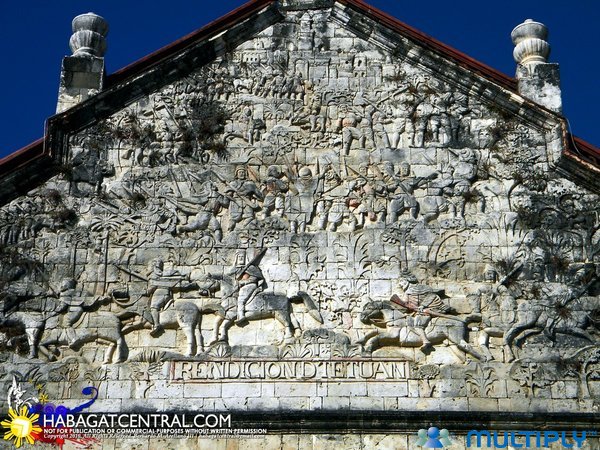
San Joaquin Church Rendicion d' Tetuan

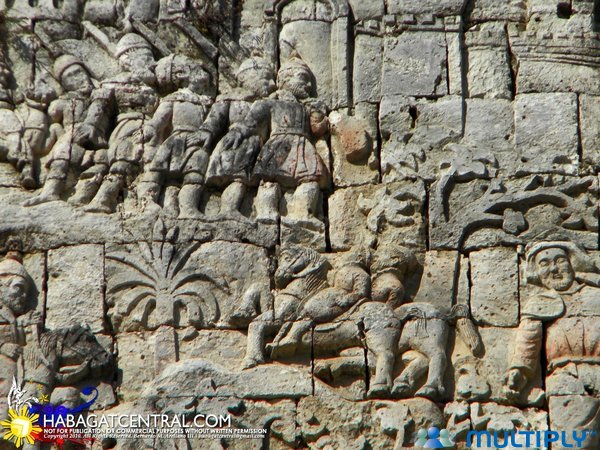
Last week, we were in Batangas for a visita iglesia in Taal’s prominent religious structures—the Basilica Minore de San Martin de Tours and Our Lady of Caysasay Shrine. Today, we fly all the way to the Visayas to visit Iloilo. Our first stop would go all the way to the southernmost town of the province, San Joaquin. This town is known to be one of the landing sites of the mythical Ten Bornean Datus. However, the crowning jewel of this southern town would be its 19th century church and its cemetery. The church however tells the story of the San Joaquin’s history, carved in stone.

La fuerza moro y espanol

(more…)

Read More

At Home in Manila: Miss Eva Kalaw’s Ancestral Home in Sampaloc

Eva Estrada Kalaw's Home

It was 2008 when I was still a part-time researcher for the inventory of old homes and buildings in Manila for Ateneo’s project, together with HCS member Jeffery Yap. One of the homes on our Sampaloc inventory was a green two-storey house located in Lepanto Street (now S. Loyola). Amidst the colossal buildings that surround it, the petite home still maintains its suburban feel. When we knocked the gates and asked for an interview, it wasn’t just an ordinary person who welcomed us. It was former senator Eva Estrada-Kalaw-unexpectedly.

(more…)

Read More

Torogan: The Forgotten Heritage of Dayawan Marawi

Dayawan Torogan today

It was raining when we came back at Marawi City that November afternoon. It was cool but somehow the atmosphere was melancholic. Among other things we would like to see in the Maranao world, it is the traditional living quarters of the royal families called torogan. It’s a good thing that there are a few that survived time and elements just near the city, in the district known to locals as “Tuka” which sits beside the placid Lake Lanao.

(more…)

Read More

Herencia y Poder: Zamboanga City Hall

A la Patria y Servicio Público! Zamboanga City Hall and Rizal Monument

In “El Pueblo,” as the local Zamboangueños call their city center or downtown, is an edifice that is synonymous to the city and perhaps throughout the history of Mindanao. The Zamboanga City Hall stands majestic amidst the well-groomed parks of Plaza Pershing (named after the American general John “Black Jack” Pershing) and Plaza Rizal. The edifice itself became Mindanao and Sulu’s bastion of power (the capital city) for several years during the American colonial era, making Ciudad de Zamboanga the capital of the whole southern islands itself!

(more…)

Read More