
Southwestern Bohol Churches: The Off-Beaten Visita Iglesia
Bohol is famous for Chocolate Hills, tarsiers, beaches, and several of its notable centuries-old Catholic Churches. The churches at Baclayon and Loboc are already included in the usual tours in Bohol, since these are in between Chocolate Hills and Tagbilaran City-Panglao Island area. These two churches receive waves of tourists everyday—and the crowning jewel of Bohol’s heritage churches. However, just like in Cebu and Iloilo, Bohol is a repository of centuries-old churches. The southwestern portion, between Tagbilaran City and Tubigon, has several notable churches worth visiting during visita iglesia, the off-beaten way.

Southwestern Bohol churches
I’ll just give some glimpse of the tour…and be ready to have your Salonpas, Efficascent, or Omega Pain Killer on your neck! I bypassed Tagbilaran’s Church due to lack of time.
Dauis: La Iglesia de Nuestra Señora de La Asunción
Just across Bohol’s capital is the town of Dauis, where Our Lady of Assumption Church is located (La Iglesia de Nuestra Señora de La Asunción). The present church was built in the 19th century, yet its history spans all the way to the 17th century as a Jesuit parish.
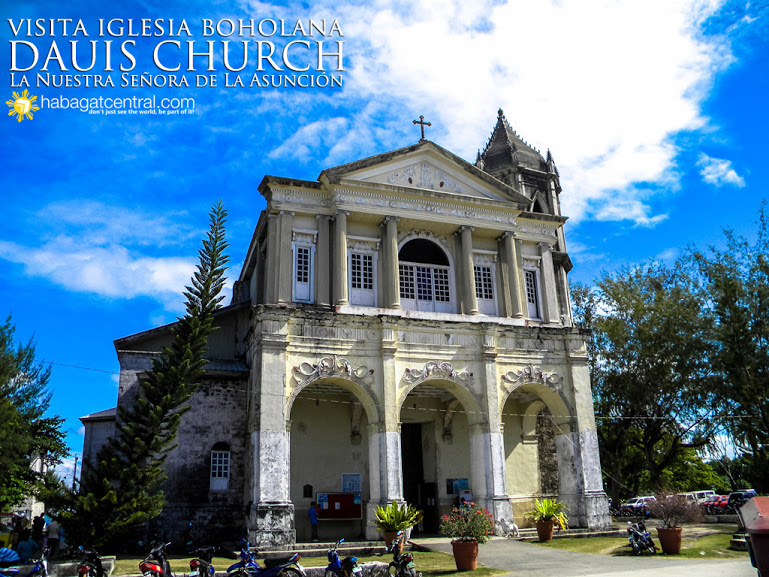
Aside from the convent and the watchtower at the back of the church, one starts looking high up at the ceilings as the church is known for its fine ceiling art done by Ray and Canuto Francia in the early 20th century.
Maribojoc: Santuario Diocesano de San Vicente Ferrer
A few kilometers north of Tagbilaran is the town of Maribojoc. Nestled between the hills and the nipa swamps, the town has some notable heritage structures such as the Punta Watchtower and its church, the Diocesan Shrine of Saint Vincent of Ferrer. Outside, it does look like just an ordinary Spanish-colonial stone church, but it is inside where you’ll be awed—again looking up at the ceiling.
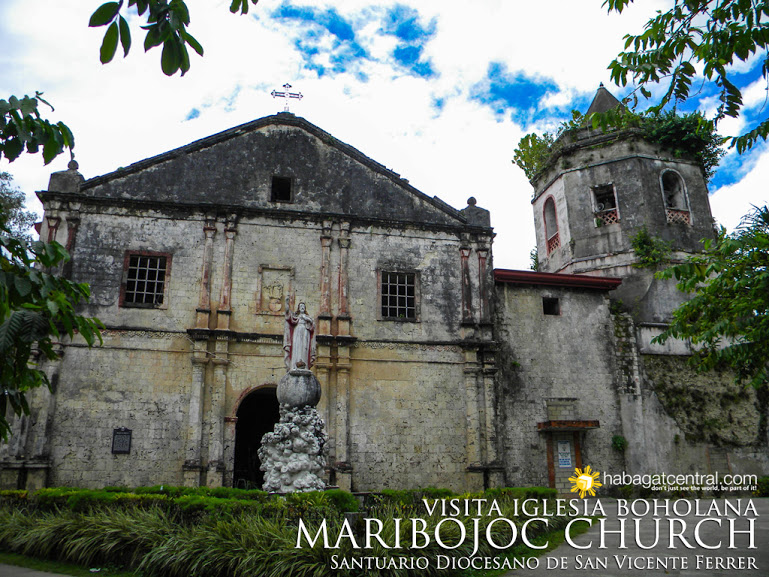
A survivor of World War 2 and ravages of time, Maribojoc Church has its retablo, its architecture, and yes the ceilings done by Maestro Ray Francia during the early 20th century. Mapapatingala ka sa langit! However, the ceilings are in need of some maintenance.
Loon: La Iglesia de La Nuestra Señora de la Luz
A 30 minute van ride way north from Maribojoc is the Church of Our Lady of Light of Loon. It is perhaps Bohol’s most massive church, with two belfries, spacious church plaza, and yet again—those ceilings painted by the renowned maestro Ray Francia. Like most of the churches we have passed by, the current stone church may have been built in the 19th century, but its history started way back in the 17th century with…the Jesuits!
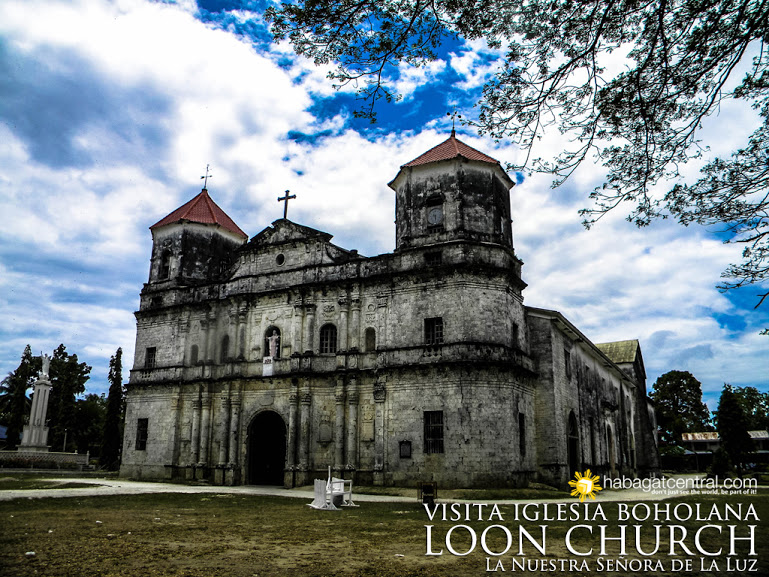
If Maribojoc is in need of some maintenance, Loon needs to save the masterpieces of the church.
Calape: La Iglesia de San Vicente Ferrer
Now this one looks fairly new as compared to the old stone churches that we passed through. The history of the church dates back in the 19th century, yet the present church itself was built in the 1950s with its neo-Gothic influence all over. Instead of being Baroque, Calape’s church became a unique work of art.
Tubigon: La Iglesia de San Isidro Labrador
This was my final stop, as I was heading back to Cebu City that Easter Sunday afternoon. I only had a time to take photos of its facade, but haven’t seen inside of it. I heard there is another Ray Francia masterpiece inside. The church itself is made of coralstone in the late 19th century, and it sits on an elevated ground overlooking the plaza complex.
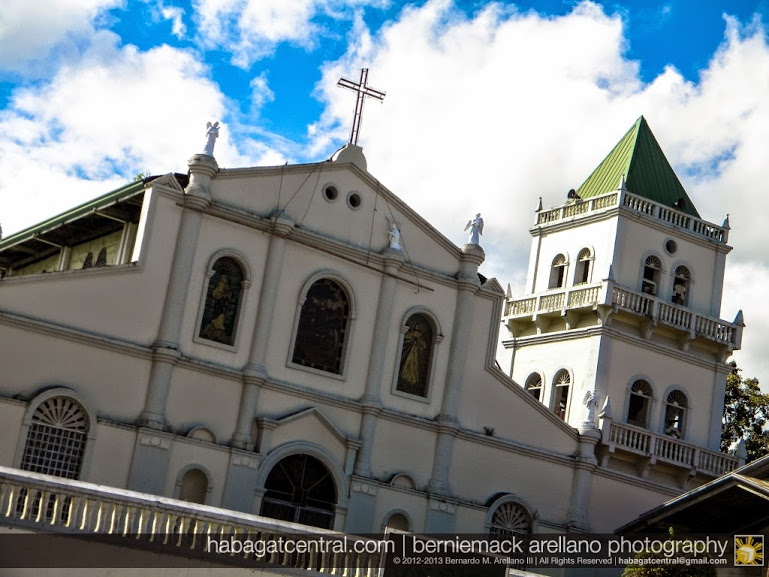
Too bad, I was in a hurry (yet my fastcraft was delayed for an hour and a half!)
Most likely, I’ll revisit these churches in the near future. For Bohol is so close to where I am now, I guess I have to explore the island more—beyond the usual Chocolate Hills and its crown jewels…and bring some Omega Pain Killer or White Flower with me—sa kakatingala ng mga kisame!

Pingback: Loon Church: The Massive and the Light - HabagatCentral