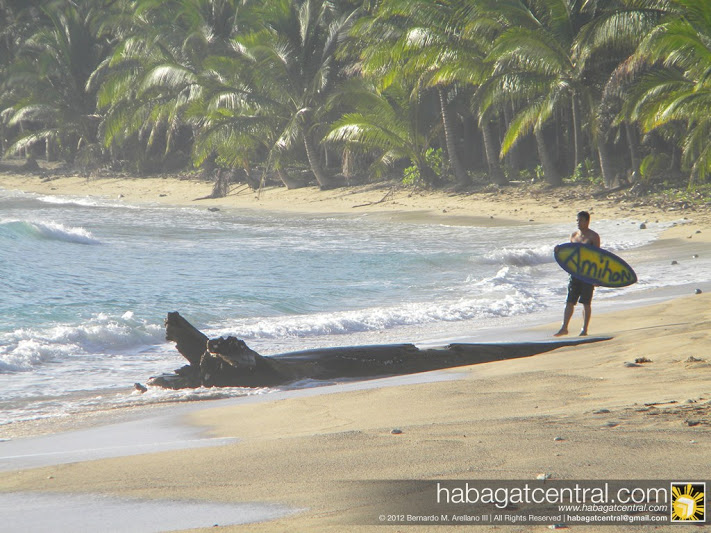
It was my first sunrise after my birthday. I was in Mati City, Davao Oriental Province to accompany my dad for his project in the mountains of the province. That morning, I went to the beach that has been popular to backpackers and surfers alike—Dahican Beach. For surfers, it’s an alternative to Siargao Island. For travelers, it’s a paradise so close to this laidback city. (more…)
Mindanao—the second largest island in, down south of the republic…very far yet so close to my heart. For most of the urbanites, it is a place that most should avoid because of adjectives associated with it: war-torn, poverty-stricken and home of the “terrorists.” Indeed, the notion of the island has evaded so many people to visit this great island in the south. However, in my own perspective, we have to take a second look onto this island. Mindanao has so much to offer, so much to see, so much to experience yet so neglected and feared by many.
Mindanao was (and for some, still is) “The Wild West” of the Philippines, as what they said-a tapestry of stories of three seemingly opposite cultures, vastly still unexplored and full of potential.
Bukidnon Provincial Capitol stands majestically in front of a wide football field, backed up by pine-covered hills, misty after rains. While we look to Luzon and Visayas for anything colonial heritage structures, Mindanao has handful of them as well. In Northern Mindanao, we thought that most civic structures were built during the contemporary times. We were wrong. (more…)
For Maranaos and Filipinos alike, Marawi City is the center of education, especially when it deals with Bangsamoro culture and Islamic studies (with numerous madrasahs in the area).
Green domes and spires
In the sprawling Mindanao State University (MSU), King Faisal Center for Islamic, Arabic and Asian Studies served as a vehicle of learning Islamic and Arabic studies, most especially in the Muslim-dominated regions of Southern Philippines. It started as a unit of College of Liberal Arts, it became a separate academic unit and established its own center inside the campus. (more…)
Musuan Peak and Fulbright Kiosk of Central Mindanao University. Click the photo to view more images of CMU and Musuan Peak
Bukidnon’s landscape is just simply marvelous. Expanse of hills blanketed in agricultural plantations, bordered with pine trees and towering mountain ranges. One can simply think whether we are still in tropical Pilipinas or not. However, between Valencia City and Maramag, a peak rises abruptly over the valley of Pulangi—Musuan Peak.
Talicud Island. Click here or the photo to view more photos
While a lot of sun worshipers who head to Davao would think of neighboring Samal Island, most people haven’t seen the virginal beauty of Talicud Island—a pearl and emerald floating on Davao Gulf. Virginal in the sense that despite its powdery-white sand beaches that stretched for miles and being so close to Mindanao’s urban hub, it is almost relatively untouched by the capitalist party and pa-sosyal business resorts.
The town of Tugaya in Lanao Del Sur province is known as the center of Maranao craftsmanship. Majority of the people in the town are engaged in arts and craft industry, particularly creating intricate wood carvings such as baul and debakan drums that are sold in the markets of Davao, Manila, and overseas. However, aside from wood, Tugaynons have another specialty—they are also metal benders—creating intricate works of art with the use of fire and earth—brass works! Kabu, kanyon, and kris are the things Tugaynons are known for.
Kabu on display at home
The community of Bubong is known for brass-making, with the large intricate brass jars called kabuand canons as its main products. The kabuis well known all throughout Mindanao as a decoration of royalty. These large brass jars varies size—from size of plant pots to human sized behemoths. Since these are made entirely of metal, it is considered as a collector’s luxury item. One kabumay reach as expensive as several thousand pesos or even a million—exported to big cities such as Manila and Davao, and even overseas. All of these were craftily made in this sleepy town beside the lake.
It was just a random weekend when my friends and I went to western Sarangani for some relaxation. Out of random places, we went to Tuka Marine Park in the town of Kiamba, an hour and a half drive and 15 minute boat ride from General Santos City. Relatively an unknown to most outsiders of Soccsksargen, this is Sarangani’s alternative to the popular white sand beach of Gumasa in the town of Glan. Tuka is also a protected park, hence you’ll get to see its natural beauty, without much of the crowd.
While the colorful and festive street dance competition is one of the highlights of Kadayawan Festival in Davao, another parade is a “must-see” by locals and tourists alike. The Pamulak sa Kadalanan or “Blooming in the Streets” Floral Parade, celebrates thanksgiving to the bountiful harvests that the peoples of Davao region receive from Mother Nature herself. The grandeur rivals that of floral parades of Panagbenga in Baguio, with emphasis on endemic fruits and flowers such as durian, marang, mangosteen, and waling-waling orchid.