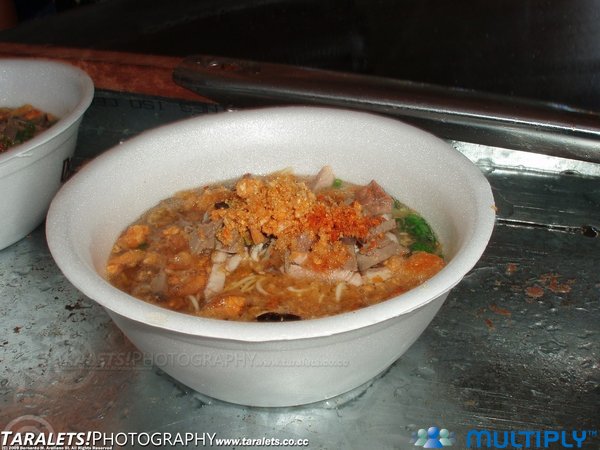
I haven’t eaten La Paz Batchoy since…I don’t remember. Heck, I haven’t eaten Batchoy when I went home in Iloilo just a couple of weeks ago! Although there are batchoyans here in Metro Manila, but I wanted to taste something different from the usual batchoy (yes, Lucky Me! therapy! Haha!)
I just found out that Deco’s La Paz Batchoy has opened up its first branch here in Manila…even though if the outlet has been open since last year pa! It’s located in the newly-opened Southgate Mall near Magallanes Interchange in Makati (for commuters, its the big blue building with a television on top…and its on “EDSA-Mantrade”…sabihin nyo lang sa konduktor na “Mantrade”). (more…)
Wow…It’s been almost two weeks since the festivities and I still can’t get over the January celebrations either. That January though, I came home for somewhat like an annual pilgrimage for myself. I couldn’t resist the temptation of those throbbing drums pounding loud and hard in this southern Philippine city every January. I’ve been with this festival since 2003, yet it never failed to amaze me as it continually innovates itself year after year it is being celebrated by the Ilonggos. Outrageous and frenzy as some say it may seem but this is Iloilo’s grandest fiesta at its finest!
It was one crisp morning of January that the city streets were starting to feel the throbbing beat of the drums, as if Iloilo City’s core was a heart. As the sun shines in this central Philippine city, the crowd gradually increased to witness and enjoy Iloilo’s grandest fiesta, the Dinagyang Festival. Now, this is the time you’ll be seeing those dancers painted in dark brown (back then it was black…welcome to the era of political correctness, hehe!) with colourful costumes and choreography so agile and fast that you shouldn’t blink during their performance! (more…)
Magsinadya kita! That’s what we do during Dinagyang. Sadya is a Hiligaynon term meaning “happy, joy or fun.” The Dinagyang Festival street dancing starts not on the Ati-Ati competition but with the Kasadyahan Festival. Held on a Saturday before the Ati-Atihan highlight of Dinagyang, it is a cultural dance parade, contest and showcase of Iloilo’s kabanwahanan or towns and several institutions within the city and the province (and I heard it is also open to all towns in Panay Island as well!) You don’t get to see soot-covered Ati warriors dancing during Kasadyahan like what most of us know about Dinagyang though. By the beat of the music and interpretative dance, the contingents showcase a myriad of cultural topics that is incorporated in every Ilonggo, from history to current events.
Eversince I settled in the Visayas, I was exposed to these big festivals that the Visayans are very proud of. Reflecting its laid back yet devoted populace, the January festivities attract spectators by the millions…all in the name of Señor Santo Niño or the Holy Christ Child. Here’s the thing though on what I’ve observed on these big Santo Niño festivals when it comes to musicality, costumes and choreography. Each of them, unique in a way…well, in my observation. (more…)
Iloilo-Guimaras Investor's Forum in Manila Invitation
Due to its success in it’s first Investor’s forum in 2008, The Iloilo Economic Development Foundation, Inc. together with the city and province of Iloilo and the province of Guimaras brings you the Iloilo-Guimaras Investment Forum in our nation’s financial hub, Makati City in Metro Manila on September 04, 2009 at Hotel Intercontinental’s Ballroom. (more…)
Not so long ago, Iloilo City experienced surges of tourists flocking in to see it’s premiere festival: Dinagyang. However this is just once in a year…and the festival period of the city goes from 2nd week of January until mid-February, with Paraw Regatta closing the season. I laud the efforts of the City Tourism Office, the private sector and also DOT for the tireless effort in promoting Iloilo City as a tourist destination, despite Typhoon Frank and lack of attractions and amenities within the city.
Now, the city is also looking for a year round income-generator based on tourism. More tourists means more business. More business means brisker economy. Brisker economy means more jobs. More jobs in return makes one city livable. This simple domino effect understood by many policy makers, is part of what our capitalist world does. But what if one’s myopic interpretation of an ordinance may create a stumbling block for the economic take-off of the city? (more…)
The International House (S.Villanueva Bldg) of Calle Real
Originally published at Cebu Daily News on May 29, 2007
Time stood still amidst the hustle and bustle of downtown traffic of modernity. Decades old establishments still stand against the test of time, reflecting the glorious days of commerce and trade of what was then, the Queen City of the South.
From its humble beginnings as a fishing community along the swampy riverside, Iloilo grew up to be one of Philippine’s premier cities when in 1855, the Spanish colonial government opened the sea port of Iloilo to international trade, and with the introduction of modern sugar farming by the British Vice-Consul Nicolas Loney. Calle Real is the manifestation of Iloilo’s glorious past. The street itself is a museum of old edifices that survived the onslaught of war, elements and time.
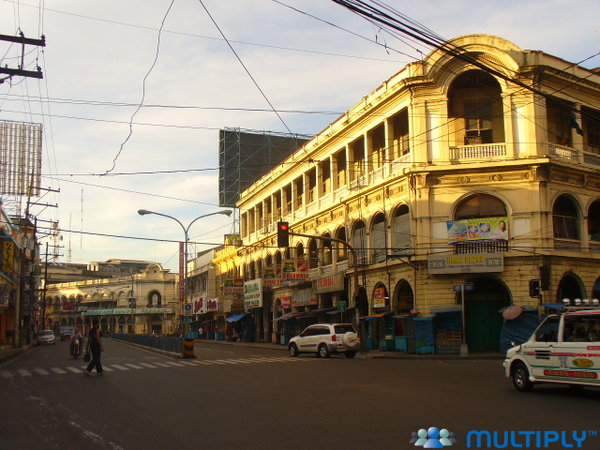
Old establishments still stand up to this very moment, still vibrant with commercial and vehicular traffic. JM Basa Street (and also Iznart St.), or known popularly as Calle Real is referred as the “Escolta” of Iloilo City. Named “Calle Real” or “Royal Street”, it spans from Plaza Alfonso XII (now known as Plaza Libertad) all the way to Plazoleta Gay and the location of commercial establishments, the Casa Real (Iloilo Provincial Capitol) as well as the residences of the Ilonggo elite. (more…)
This was my personal experience crossing the Visayas on that fateful night. It was daring, it was bold and some say it was stupid. But nevertheless, I earned great experience with this trip and will be doing this route over and over again. This article was posted on June 15, 2007 at Habagat.i.ph originally entitled “Bittersweet Escape: Two Queen Cites, One Night, One Sugar Island.”
I’m experiencing problems with my life in Cebu during these times. At times like these, I just wanted to get out of everything, therefore I went home, to Iloilo. The sudden decision that I made affected the schedule of my whole week for I wanted to escape the urban jungle the soonest time possible, under the cover of the night. Crossing the seas and the mountains in the cover of the night and the shade of morning dew. In less than 12 hours. For the faint-hearted and non-risk takers, this is not for you. For cash-strapped and the adventurous, this is one hell of a risking cutting trip to Iloilo from Cebu! (more…)
Ilonggo cuisine is one of the most famous in the islands. Known for the La Paz Batchoy, Pancit Molo, Chicken Inasal and more, the delicacies of the people of the gentle folks of the Western Visayan region of the Philippines gives a glimpse on its intricate culture and civilization.
But again, Ilonggo cuisine doesn’t end with the institutionalized La Paz Batchoy that many people know about through popular instant noodle brands. There is more to Ilonggo cuisine that meets the eye.
Here’s a short feature documentary produced by the City Government of Iloilo together with ON Creative Productions: