Loon Church is considered to be the biggest church in the entire island province of Bohol. I don’t have the stats but this century-old church indeed is huge! It was a surprise seeing this treasure on a high noon that Eastern Sunday, never realizing that only a few months later, it will implode to rubble along three souls that October morning.
When the earth shook violently that Tuesday morning at Cebu, we thought everyone was safe from harm. We were wrong. The power of social media, and thanks to the stability of communication in the city, information steadily streamed my tab. Offices were immediately evacuated. That morning, we thought we will be seeing only minor damages, but never had we known that it has become Visayas’ most powerful in more than 20 years and has toppled several buildings. However, I was moved when I saw the photo of the belfry ofSanto Niño de Cebu Basilica, ruined. I was stunned, shocked, and a bit teary-eyed.
Basilica Minore de Santo Nino de Cebu’s belfry ruined by the quake
The rustic and laid-back coastal town of Oslob in Cebu is something worth visiting. Aside from the deluge of visitors looking forward to swim with the whale sharks, the town has a unique charm of its own for cultural and art aficionados—the Spanish-colonial era La Iglesia de la Imaculada Concepcion, the Cuartel and the watchtower, all within the town’s old core.
Oslob
Several years ago, I visited the southern town of Oslob in Cebu. Back then, it wasn’t at the limelight of tourism—except maybe of the few and those who visit Sumilon Island. It was our visita iglesia in one of Cebu’s largest Spanish-colonial churches. What surprised us with this town was aside from its church were the ruins of the Army Barracks called Cuartel, and the once towering watchtower, slowly eroding in the beach.
Oslob then was a very laidback town…even up until now.
Bohol is famous for Chocolate Hills, tarsiers, beaches, and several of its notable centuries-old Catholic Churches. The churches at Baclayon and Loboc are already included in the usual tours in Bohol, since these are in between Chocolate Hills and Tagbilaran City-Panglao Island area. These two churches receive waves of tourists everyday—and the crowning jewel of Bohol’s heritage churches. However, just like in Cebu and Iloilo, Bohol is a repository of centuries-old churches. The southwestern portion, between Tagbilaran City and Tubigon, has several notable churches worth visiting during visita iglesia, the off-beaten way.
Southwestern Bohol churches
I’ll just give some glimpse of the tour…and be ready to have your Salonpas, Efficascent, or Omega Pain Killer on your neck! I bypassed Tagbilaran’s Church due to lack of time. (more…)
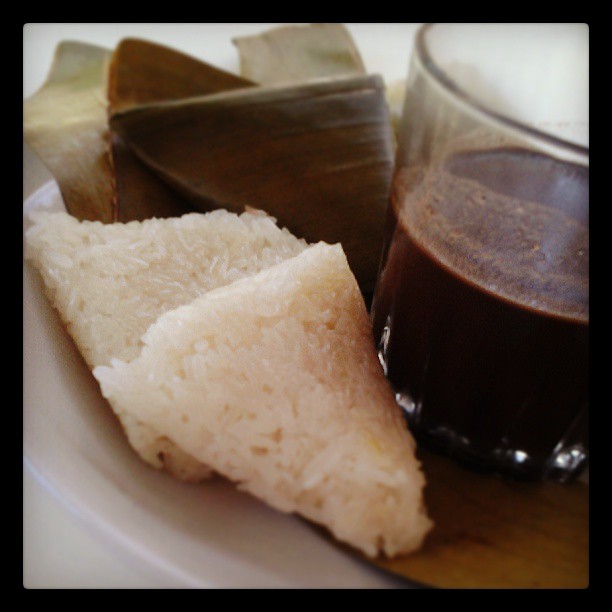
For the past few weeks, I have been living alone here in Cebu. I have to readjust everything, from environment to finances. There are times that I only have a few pesos in my wallet. Not even the usual rice and ulam breakfast can fit in. Yet luckily, Cebuanos have one thing in their culinaria that is often overlooked in this day and age—puto maya and sikwati!
The combination of puto maya (rice cake) and sikwati (chocolate) for what some people call, “the poor man’s breakfast.” For payday’s eve, people call it “Manna from Heaven!”
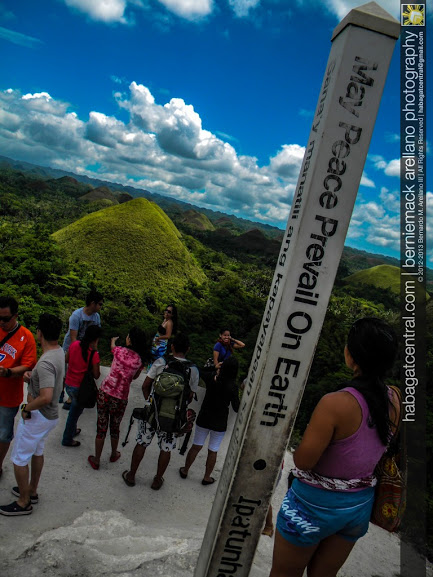
Most tourists head to Tagbilaran City, the capital of Bohol Province, if they wanted to see the renowned Chocolate Hills itself. Usually, it is tagged on a package tour which goes to the “tourist belt” in southern coast. However, if you are doing DIY (Do-It-Yourself) tour or just want to avoid the influx of tourists heading to Tagbilaran, head on to Tubigon instead. In a matter of an hour or so, you’re right at the heart of Chocolate Hills—outside the tourist trail!
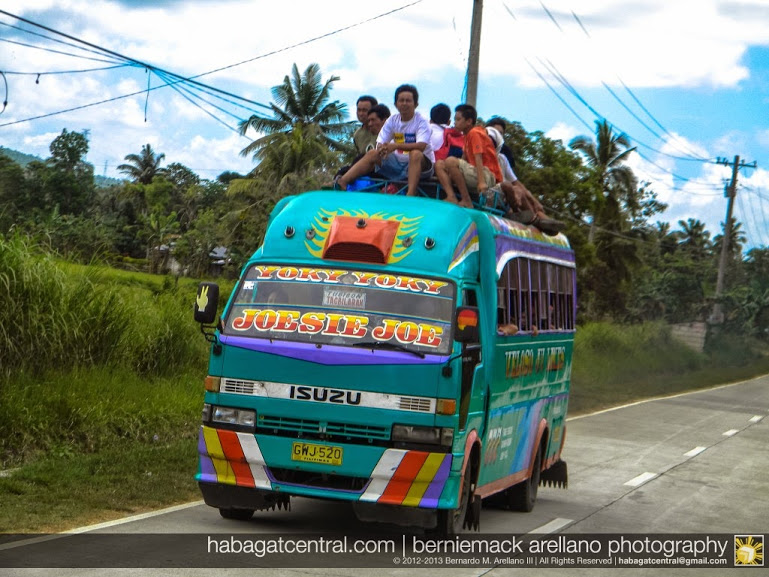
Bus heading to Tubigon from Carmen…a usual sight in rural Bohol. For more photos of the road trip in Bohol, click on the image.
There are direct flights to Tagbilaran City or taking the usual fast craft from Cebu to Tagbilaran, which costs more or less PhP 400 on regular fare, one way (and usually gets full). However, most tourists don’t know about going to Chocolate Hills through the town of Tubigon in northern Bohol.
Cebu is known for being the oldest European settlement in the Philippine Islands, home of Magellan’s Cross, the Santo Nino, Sinulog, and where Lapu-Lapu once ruled and killed a Portuguese explorer-conquistador. However, there is more to Cebuano history and culture than meets the “mainstream” eye, even for the locals themselves. Hence, the Ramon Aboitiz Foundation Incorporated (RAFI) initiated “Gabii sa Kabilin” or “A Night of Heritage.”
Cebu’s Magellan’s Cross Late at Night during Gabii sa Kabilin. Click the photo for more images of 2013 Gabii sa Kabilin
It wasn’t my first time cruise in the sea between Cebu and Bohol. Back in 2006, we had a wonderful yet thrilling ride with the waves of Hilutungan Channel, with habagat winds raging on. This time, we enjoyed the calm sea and the beautiful tropical weather, hopping in the coral islands. This is island hopping, sun, sea, and sand without driving far away from Metro Cebu…well in fact, the islands are within and at the fringes of Metropolitan Cebu (technically speaking)!
Every time I go home, I see this woman on top of a building in the city-a woman aglow in gold who stares forwardly towards the sea, the green hills of Guimaras, and beyond. She holds stalks of rice against her bosom while a scythe on her left. Dressed simply with her traditional patadyong and covered her hair with the hablon, she stands guard on a pedestal that brought her to new heights. She’s a farm girl from the fields of Panay.
Lin-ay, the Lady on top of Iloilo’s City Hall, symbolic of Ilonggo people. The bronze statue was a creation of Ilonggo artist Edward Defensor
Though she may look simple and unassuming, but behind her eyes and stand is a story of rise, fame, power, vices, betrayal, damnation, and redemption. She is a mother who once shaped an entire civilization. Her name is Lin-ay, the lady of the south.