Return to UP Mindanao in Davao
UP Mindanao and the Oblation
Yes, I am an alumnus of UP Visayas of Miagao in Iloilo—what we call as a UP campus where the mountains meet the sea. I cherished memories of “the best days of my life” in college. However, there is another UP campus that is also very dear to me—that’s UP Mindanao in Davao City. Although I only spent two months in this campus at the foothills of Mount Apo, it has influenced and shaped my life for who I am now.
UP Mindanao Seal
University in the Philippines Mindanao back then was the newest autonomous unit in the entire UP system. Located some more or less 15 kilometers away from downtown Davao City, the campus sits at the foothills of Mount Apo, in the district of Tugbok near the community of Mintal. Unlike other campuses, it hasn’t been fully developed. There are only a few buildings and its main access roads were narrow barrio roads.
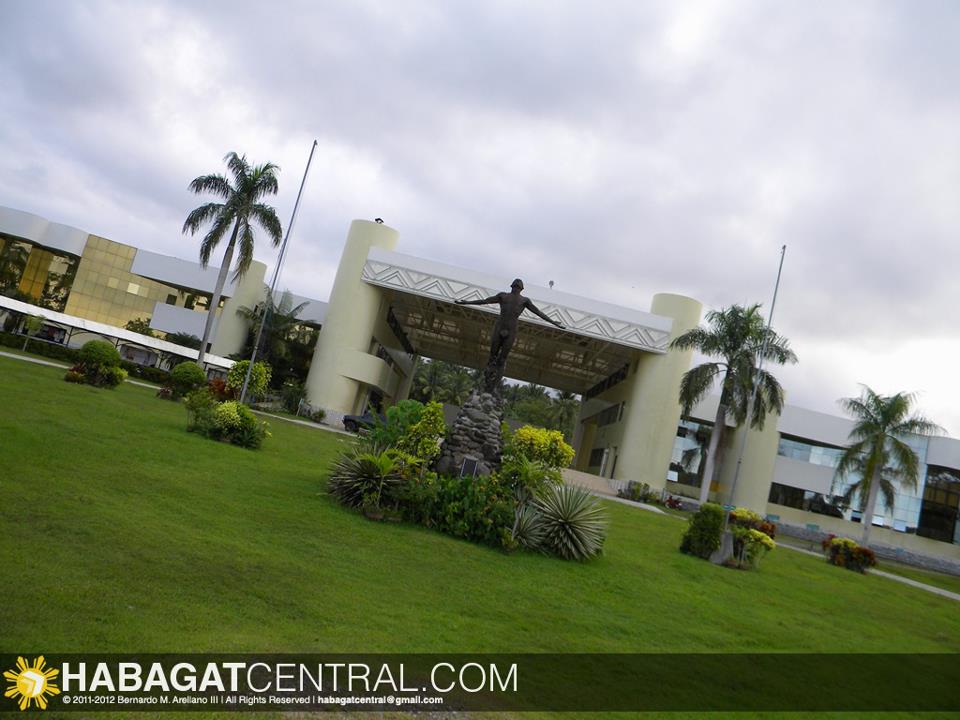
The Admin Building from University Avenue
UP Mindanao’s main focus is Mindanao studies and developmental and research courses, that also may attract Muslim and Lumad students.
The Oblation
It was in 1995 when UP Mindanao was established under Republic Act 7889. Then College of Arts and Sciences (which would later on divide itself into present College of Humanities and Social Sciences and College of Science and Mathematics) and School of Management were established. In 1998, upon installing the Oblation in its present campus at Bago Oshiro, the Board of Regents granted full autonomy to UP Mindanao.
The bulletin boards
Back in 2004 when I first went there, the campus was not yet fully developed. The road going to the campus was rough with boulders. The students even call it as “Abortion Road” since the road was so rough, a pregnant woman’s baby may fall. Going here is not for scaredy-cats. You need to ride a habal-habal or motorcycle in such rough road conditions!
Maguindanaoan Road. It connects CHSS with CSM. This was once unpaved during my brief stint here in 2005.
Among all UP campuses I have been to, this is so far the most isolated. It’s more or less 2 kilometers away from Davao-Bukidnon Highway and covered with dense coconut plantations with durian and other fruit-bearing trees in between.
The Administration Building, perhaps the largest establishment in the campus, was half finished. No paint but all administration and classrooms for the CHSS was (and still is) here.
Elias B. Lopez Hall. The main dormitory of UP Mindanao
Elias B. Lopez Hall is the dormitory of the campus. I spent my two months here. The Interactive Learning Center was here too.
Then there was the makeshift cafeteria in front of the dorm where we had our breakfast, lunch, and dinner—or merienda.
Then there’s the Human Kinetics Building, or known as “Jaworski Hall,” because it was constructed
“by the efforts of then Senator Robert Jaworski.”
The makeshift cafeteria, now abandoned. The cafeteria transferred to Kalimudan Student Center, just a few meters down the road.
However, the most isolated among all was the College of Science and Mathematics Building or popularly known as “Kanluran.” One thing notable about this area though are four statues sculpted by well-known Mindanao artist Kublai Millian.
Kublai Millian’s work at UP Mindanao and the College of Science and Mathematics (aka Kanluran)
Kublai Millian’s masterpiece in UP Mindanao
The First Blai-ding Garden at Kanluran Center, then and now.
UP Mindanao was…really far from urban landscape. I understood that since my home alma mater is 40 kilometers away from the city—conducive for studying.
The mosque at the entrance of UP Mindanao
I spent two months here as a cross-registrant for PI100 in my last summer as a college student. I learned to live and experience what it is in UP Mindanao.
The Student Center
There were times that cool air descends from Mount Apo in such force in which we were wearing jackets in the middle of summer noon. There were times that durian’s smell lingers in the campus. There were times that I had my near accidents along the “Abortion Road.” There were times that we jog every morning under the beautiful blue skies. But most of the time, I was inside the ILC as a student assistant who’s finding a way to kill boredom through this volunteer work. Cross-registrant but instantly became a student assistant in UPMin. It became my key to know more about this unit more.
Street names inside the campus. Named after ethnolinguistic groups found generally in Davao and Mindanao.
Until the time I graduated, I went here to do my research on thesis. Then after that, I never saw her again.
Then this Kadayawan 2012, I had a chance. After coming from the Philippine Eagle Center, I decided to take a quick visit to UPMin—and was I in surprise!
UP Mindanao Entrance Marker with a Vinta-inspired theme
The Administration Building is now complete! There is a “University Road.” The Oblation Circle has been paved. The old army barracks is now Kalimudan Student Center. A beautiful yet petite mosque greets those who enter the campus. However, the best part of it was—WALA NANG ABORTION ROAD!!!
Bagobo Lane
However, the old cafeteria was left abandoned. It was moved to Kalimudan area.
View Larger Map
How to get to UP Mindanao:
- Ride any jeepney bound for Mintal from downtown Davao City, preferably in Roxas Avenue or Bangkerohan. Fare is P20 (?)
- Another option is to take Annil Bus bound for Calinan at its Bangkerohan Terminal. It will pass by Mintal. Fare is P20 (?).
- Disembark at either Holy Spirit Hospital or Mintal Palengke. There, take a habal-habal or motorcycle for hire bound for UP. Costs P15-P20.